Digital Architects Reshape Urban Futures Intelligently


The Dawn of the Algorithmic City
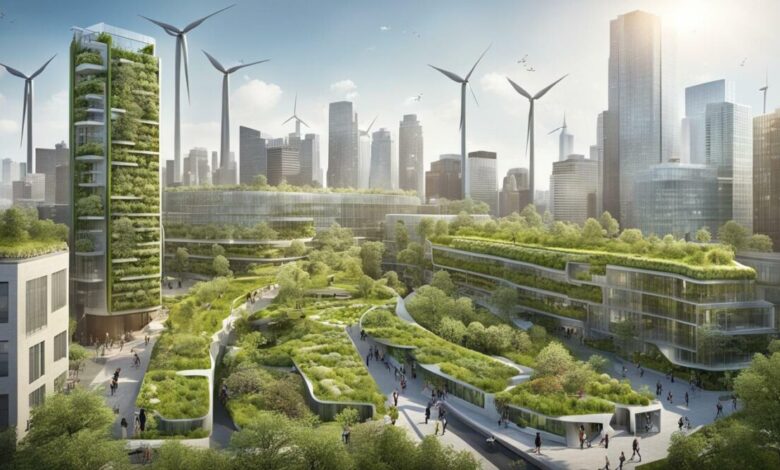
We stand at the precipice of a new urban age, one where the physical and digital realms are converging to create cities that can see, think, and feel. The skylines of the future will be defined not just by steel and glass, but by data streams and algorithms. At the helm of this transformation is a new breed of visionary: the digital architect. These professionals are no longer confined to designing static structures; they are now orchestrating complex, interactive ecosystems where infrastructure, data, and human experience blend seamlessly. This paradigm shift is moving us beyond the concept of mere “smart cities” towards truly responsive urban environments that can learn, adapt, and proactively enhance the quality of life for every resident. This article explores how digital architects are leveraging cutting-edge technologies to tackle age-old urban challenges, creating safer, more efficient, and profoundly more humane cities for the 21st century and beyond.
A. The Core Toolkit: Technologies Powering the Digital Transformation
Digital architects operate at the intersection of design, data science, and urban planning. Their toolkit is a suite of interconnected technologies that form the nervous system of the modern city.
A. The Internet of Things (IoT) and Sensor Networks
The foundational layer of the digital city is a pervasive network of sensors. These are the city’s nerve endings, collecting real-time data on everything from traffic flow and air quality to energy consumption and waste levels.
-
Environmental Monitoring: Networks of sensors track pollution particulates, noise levels, temperature, and humidity, allowing for hyper-local environmental management.
-
Infrastructure Health: Sensors embedded in bridges, roads, and buildings monitor for stress, corrosion, and wear, enabling predictive maintenance before catastrophic failures occur.
-
Resource Management: Smart meters for water and electricity provide granular data on consumption patterns, identifying leaks and optimizing distribution networks.
B. Big Data and Advanced Analytics
The raw data from IoT sensors is meaningless without interpretation. Digital architects use big data platforms and analytical tools to process this information, identifying patterns, predicting trends, and generating actionable insights.
-
Predictive Modeling: By analyzing historical and real-time traffic data, cities can predict congestion hotspots and proactively adjust traffic light timings or suggest alternative routes to commuters.
-
Anomaly Detection: Algorithms can spot unusual patterns, such as a sudden drop in water pressure indicating a main break or an unexpected crowd gathering, enabling rapid emergency response.
C. Artificial Intelligence (AI) and Machine Learning (ML)
AI is the brain of the digital city. Machine learning algorithms learn from the continuous influx of data, allowing urban systems to become increasingly intelligent and autonomous over time.
-
Optimizing Public Transit: AI can dynamically adjust bus and train schedules based on real-time passenger demand, reducing wait times and improving operational efficiency.
-
Automated Energy Grids: AI can balance energy supply and demand across a city, integrating renewable sources like solar and wind by predicting output and directing power where it is needed most.
D. Digital Twins: The Virtual City Mirror
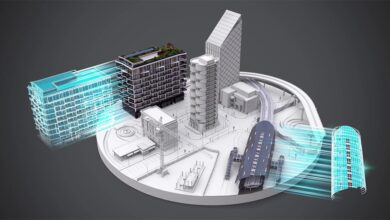
A digital twin is a dynamic, virtual replica of a physical city or district. It is the ultimate sandbox for digital architects.
-
Simulation and Testing: Planners can simulate the impact of a new building on wind patterns, sunlight, and traffic before a single brick is laid. They can test emergency evacuation plans or model the effects of climate change.
-
Real-Time Operations: The digital twin is fed live data from the physical city, allowing officials to monitor and manage urban systems in real-time, visualizing problems and solutions in an immersive, data-rich environment.
E. The Digital Fabric: 5G and Edge Computing
The high-speed, low-latency connectivity of 5G networks is the essential conduit for this data exchange. It enables the real-time communication between millions of devices. Edge computing processes data closer to its source (e.g., in a traffic camera), rather than sending it to a distant cloud, which is critical for applications requiring instant response, such as autonomous vehicles.
B. Strategic Applications: Reshaping the Urban Experience
These technologies are not abstract concepts; they are being deployed to solve concrete urban problems and dramatically improve daily life.
A. Revolutionizing Urban Mobility and Transportation
The digital transformation of mobility is perhaps the most visible change for citizens. Digital architects are designing systems to eliminate congestion and create seamless, multi-modal journeys.
-
Integrated Mobility-as-a-Service (MaaS): Digital platforms combine public transit, ride-sharing, bike-sharing, and scooter rentals into a single, user-friendly app. Users can plan and pay for a door-to-door journey that uses the most efficient combination of transport modes.
-
Smart Traffic Management Systems: AI-powered traffic lights that adapt in real-time to changing vehicle and pedestrian flows can reduce average commute times by over 20%. Connected vehicle technology allows cars to communicate with each other and with infrastructure to prevent accidents and optimize traffic flow.
-
Intelligent Parking Solutions: Sensors in parking spots can guide drivers to available spaces via mobile apps, drastically reducing the time and fuel wasted circling city blocks in search of parking.
B. Enhancing Public Safety and Security
Digital tools are empowering a more proactive and effective approach to public safety, moving beyond simple surveillance.
-
Gunshot Detection: Acoustic sensors can pinpoint the location of gunfire within seconds, automatically alerting police and providing critical situational awareness.
-
Predictive Policing: While ethically nuanced, AI can analyze crime data to identify statistical patterns and suggest areas where police presence could deter criminal activity.
-
Emergency Response Optimization: During an incident, data from multiple sources (traffic cameras, social media, emergency calls) can be fused in a command center to provide responders with a comprehensive, real-time view of the situation, enabling faster and more coordinated aid.
C. Building Sustainable and Resilient Infrastructure
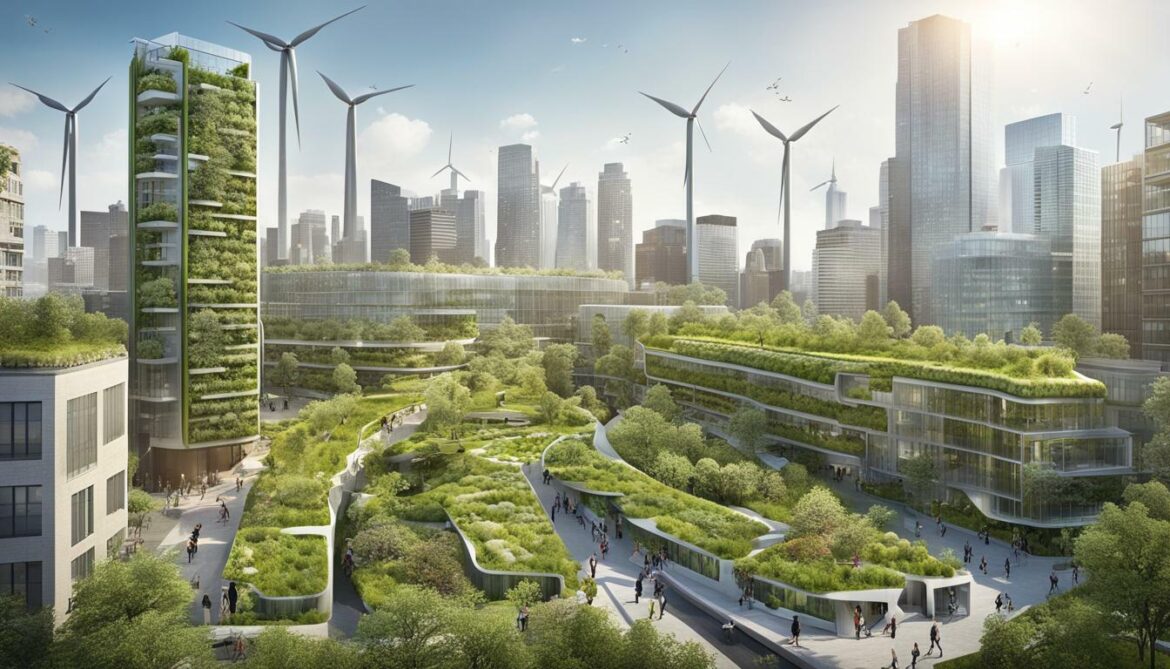
Sustainability is a core mandate for digital architects. Technology is the key to creating cities that are not only smarter but also greener and more resilient to climate change.
-
Smart Energy Grids: These grids use AI to balance supply and demand, integrate renewable energy sources, and even allow buildings with solar panels to sell excess power back to the grid.
-
Precision Resource Management: Smart water systems can detect leaks instantly, and smart waste bins can signal when they are full, allowing for collection routes to be optimized, reducing fuel consumption and emissions from garbage trucks.
-
Climate Adaptation: Digital twins can model the impact of extreme weather events like floods or heatwaves, allowing cities to test and implement resilience strategies, such as deploying adaptive flood barriers or identifying neighborhoods most vulnerable to heat stress.
D. Fostering Civic Engagement and Governance
The digital city is a more participatory city. Digital architects are creating platforms that break down the barriers between citizens and their government.
-
Participatory Budgeting Platforms: Residents can directly propose and vote on how to allocate portions of the municipal budget, fostering a sense of ownership and community.
-
Digital Public Services: From reporting potholes via an app to applying for permits online, digital interfaces make government services more accessible and efficient.
-
Open Data Portals: Cities are publishing non-sensitive data for public use, enabling journalists, academics, and citizens to conduct their own analyses, build new applications, and hold government accountable.
C. Case Study in Synthesis: Sidewalk Labs’ Vision for Toronto
Although the full-scale project was not realized, the vision put forth by Sidewalk Labs for Toronto’s Quayside district remains a seminal case study in comprehensive digital architecture. The proposal integrated all the aforementioned technologies into a holistic urban fabric:
-
Adaptive Streets: Streets designed to be dynamically reconfigurable, with embedded sensors and heated pavements to melt snow.
-
Ubiquitous Connectivity: A foundational layer of high-speed internet accessible to all.
-
Modular Buildings: Structures built from standardized, adaptable components to allow for easy reconfiguration and affordability.
-
Climate-Positive Goals: A goal to be the first large-scale positive energy community, generating more energy than it consumes.
While the project raised important questions about data governance, it serves as a powerful blueprint for how digital architects think about integrating technology at every level of urban design.

D. Navigating the Challenges: Ethics, Equity, and Privacy
The digital transformation of cities is not without significant risks. Digital architects have a profound ethical responsibility to build systems that are fair, secure, and inclusive.
-
The Data Privacy Dilemma: The same sensor networks that improve efficiency can become a pervasive surveillance apparatus. Robust data anonymization policies, clear public consent frameworks, and transparent data usage agreements are non-negotiable.
-
Algorithmic Bias and Digital Equity: If AI systems are trained on biased historical data, they can perpetuate and even amplify social inequalities. Furthermore, a “digital divide” could emerge, where citizens without smartphones or digital literacy are excluded from the benefits of the smart city. Digital architects must prioritize universal design and digital inclusion.
-
Security Vulnerabilities: A highly connected city is a potentially hackable city. Protecting critical infrastructure from cyberattacks must be a primary design consideration from the outset, not an afterthought.
Conclusion: The Human-Centric Digital Metropolis
The work of the digital architect is ultimately not about technology for technology’s sake. It is about harnessing the power of data and connectivity to solve fundamental human problems: how we move, how we stay safe, how we conserve our resources, and how we engage with our communities. The most successful digital cities of the future will be those that place human well-being and democratic values at their core, using technology as a tool to enhance, rather than replace, the vibrant, messy, and beautiful human interactions that have always defined urban life. The digital architect is the crucial mediator in this process, tasked with the immense responsibility of weaving a digital nervous system into our urban fabric that is not only intelligent but also wise, equitable, and truly serves the public good.
Tags: Digital Architecture, Smart Cities, Urban Technology, IoT, AI, Digital Twin, Sustainable Cities, Urban Planning, Data Analytics, Future Cities