Sustainable Forms Inspire Tomorrow’s Architectural Evolution


The New Language of Form in Sustainable Design
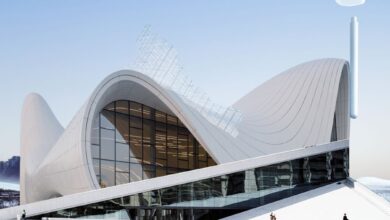
We stand at a pivotal moment in architectural history where the very shapes and structures that define our built environment are undergoing a profound transformation. The sterile glass boxes and concrete monoliths of the 20th century are gradually giving way to a new vocabulary of forms—forms that are not merely aesthetically pleasing but are intrinsically sustainable, biologically inspired, and technologically enabled. This evolution goes far beyond simply adding solar panels to a roof; it represents a fundamental rethinking of how a building’s shape, orientation, and materiality can actively contribute to environmental regeneration and human well-being. The sustainable forms emerging today are not just inspired by nature; they perform like natural organisms, creating a built environment that breathes, adapts, and thrives in synergy with the planet. This article explores the key principles, groundbreaking materials, and revolutionary designs that are shaping this new architectural language, demonstrating how sustainable forms are paving the way for a more resilient and harmonious future.
A. The Core Principles Driving Sustainable Form-Making
The shift towards sustainable forms is guided by a set of interconnected principles that prioritize performance over pure aesthetics. These principles serve as the philosophical and practical foundation for contemporary ecological design.
A. Biomorphic Design and Organic Mimicry
Moving beyond basic biophilia (the love of nature), biomorphism involves directly mimicking the forms, patterns, and systems found in the natural world to solve human problems.
-
Structural Efficiency: Nature’s designs are inherently efficient, using minimal material for maximum strength. The branching patterns of trees, the hexagonal honeycomb of beehives, and the spiral forms of seashells are being studied and replicated to create stronger, lighter, and more material-efficient building structures.
-
Environmental Responsiveness: By studying how termite mounds maintain constant internal temperatures despite external extremes, architects can design passive ventilation systems. By emulating the way a lotus leaf sheds water, they can create self-cleaning building surfaces.
B. Performance-Driven Geometry
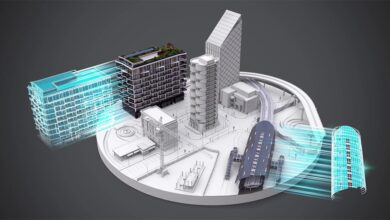
The shape of a building is its first and most critical environmental modifier. Performance-driven geometry uses computational analysis to arrive at forms that are optimized for specific climatic and site conditions.
-
Solar Responsive Façades: Building envelopes are no longer flat planes but dynamic, articulated surfaces. These may include complex shading devices, light shelves, and strategically placed apertures that maximize natural daylighting while minimizing solar heat gain, drastically reducing the need for artificial lighting and air conditioning.
-
Aerodynamic Shaping: In windy urban corridors, building forms are being sculpted to mitigate downdrafts and wind turbulence at street level, improving pedestrian comfort and enhancing the building’s structural stability without adding excessive mass.
C. The Circular Economy and Material Logic
The principle of a circular economy—where waste is designed out and materials are continuously reused—profoundly influences architectural form. Buildings are conceived as “material banks.”
-
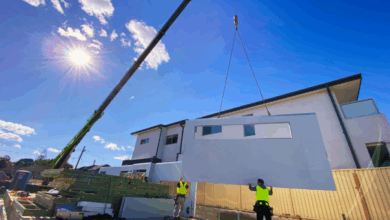
Design for Disassembly (DfD): This leads to forms that are modular and composed of prefabricated components that can be easily bolted together and, just as importantly, taken apart. The aesthetic becomes one of expressed joints and modular repetition, celebrating the potential for future reuse rather than permanent, monolithic construction.
-
Form Follows Material Lifecycle: The shape of a building may be directly derived from the properties of sustainable or upcycled materials. For instance, a structure built from reclaimed timber beams will have a different formal language than one built from poured concrete, leading to unique and authentic architectural expressions.
B. Material Innovations Giving Rise to New Forms
The sustainable forms of tomorrow are being unlocked by a revolution in material science. These new substances are not just eco-friendly; they possess unique properties that demand new ways of thinking about shape and structure.
A. Engineered Timber and Mass Timber Construction
The development of products like Cross-Laminated Timber (CLT) and Glulam has ushered in a “wood age.” These materials are strong enough to construct skyscrapers and offer a renewable, carbon-sequestering alternative to concrete and steel.
-
The Return of Warmth and Curvature: Unlike the rigid, rectilinear forms often associated with steel frames, wood lends itself to warmer aesthetics and softer, more organic curves. The use of timber is inspiring a wave of buildings that feel more connected to forests and natural landscapes.
-
Prefabrication and Precision: Mass timber components are typically precision-cut off-site, leading to incredibly efficient construction and formal possibilities that would be prohibitively expensive with traditional methods.
B. Bio-Fabricated and Living Materials
The most cutting-edge frontier involves using biological organisms themselves as manufacturing partners.
-
Mycelium Composites: The root structure of mushrooms (mycelium) can be grown around agricultural waste to form strong, lightweight, and fully compostable insulation panels and bricks. These can be grown into custom shapes, creating forms that are literally alive during their fabrication.
-
Bio-Receptive Surfaces: Architects are designing concrete and other materials with specific chemical compositions and surface textures that encourage the growth of moss and lichens. This turns building facades into living, breathing, air-purifying ecosystems, changing form and appearance over time.
C. Responsive and Smart Materials
These are materials that can change their properties in response to environmental stimuli, allowing a building’s form to be dynamic rather than static.
-
Self-Healing Concrete: Embedded with bacteria that produce limestone when exposed to water and air through cracks, this material can repair its own form, extending its lifespan and reducing maintenance.
-
Phase-Changing Materials (PCMs): These substances are integrated into walls and ceilings, where they absorb excess heat by melting and release it by solidifying. This acts as a thermal battery, smoothing out temperature fluctuations and reducing the formal need for bulky HVAC systems.
C. Iconic Case Studies: Sustainable Forms in Practice
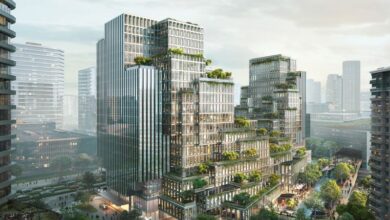
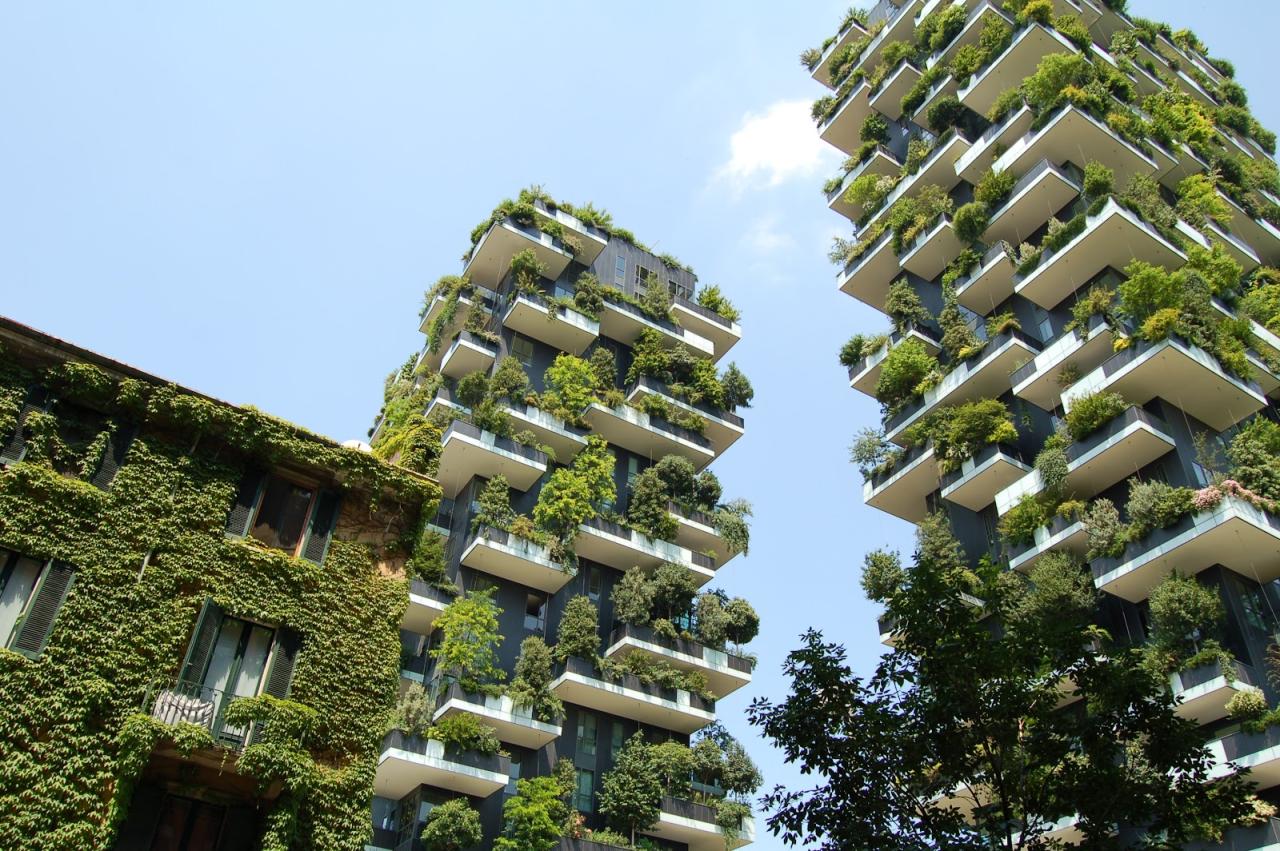
A. The Bosco Verticale (Vertical Forest), Milan
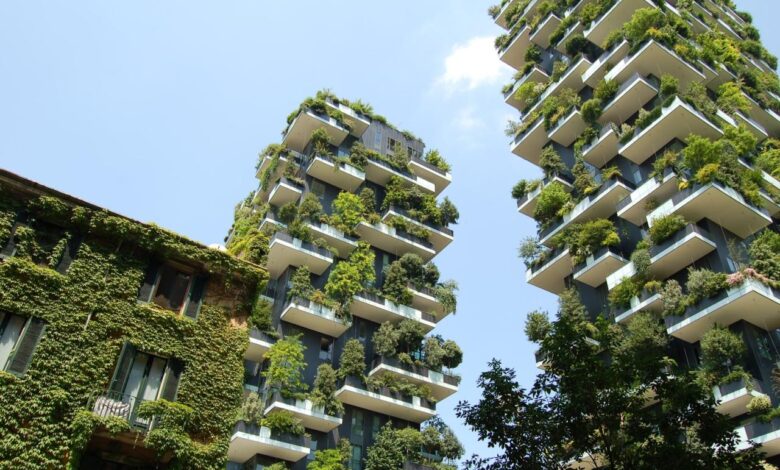
This pair of residential towers is perhaps the most iconic example of biomorphic design applied at a high-density scale. The form of the towers is defined by their purpose: to host hundreds of trees, thousands of shrubs, and perennial plants. The protruding balconies, irregular floor plans, and structural reinforcements are all direct consequences of integrating a forest into the vertical form, creating a micro-ecosystem that improves air quality and biodiversity.
B. The Eden Project, UK
Comprising a series of interconnected biomes, the Eden Project’s form is a direct result of performance-driven geometry. The hexagonal and pentagonal geodesic domes were chosen because they are the most efficient way to enclose the largest volume with the least surface area, minimizing material use and energy loss. The ETFE (a translucent polymer) cushions used for the cladding are lightweight and allow optimal sunlight for the plants inside.
C. The Hy-Fi Tower, New York
This temporary structure, built for MoMA’s PS1, was a landmark in bio-fabricated architecture. Its organic, circular form was constructed entirely from bricks grown from cornstalk and mycelium. The towers were designed to be composted after their use, returning their nutrients to the soil and creating a powerful, tangible example of a truly circular architectural form.

D. The Future Trajectory: Where Sustainable Forms Are Headed
The evolution of sustainable forms is accelerating, driven by technology and urgency.
-
4D Printing: This involves 3D printing objects that can change shape over time (the 4th dimension) in response to stimuli like water, heat, or mechanical force. This could lead to building components that self-assemble or façades that reconfigure themselves daily to optimize solar exposure.
-
AI-Generated Morphogenesis: Using generative design algorithms, architects can input a set of goals (e.g., maximize daylight, minimize energy use, use 40% less material) and the AI will explore thousands of potential forms to find the most optimal solutions, often resulting in highly efficient, unexpected, and beautiful shapes that a human designer might never conceive.
Conclusion: A Future Shaped by Wisdom
The move towards sustainable forms represents a maturation of the architectural discipline. It is a shift from an architecture of dominance over nature to one of dialogue with it. The flowing curves, responsive façades, and living materials we see emerging are more than a style; they are the physical manifestation of a deeper ecological intelligence. They prove that the most advanced and forward-thinking design is not cold and mechanical, but warm, adaptive, and inherently life-affirming. As these principles continue to permeate the global design community, the city of the future will not be a stark, gray landscape, but a diverse and resilient ecosystem of buildings that inspire not just through their beauty, but through their profound and active harmony with the world they inhabit.
Tags: Sustainable Architecture, Biomorphic Design, Green Building, Circular Economy, Mass Timber, Bio-Fabrication, Responsive Materials, Architectural Forms, Eco-Design, Future Materials