Biophilic Design Transforms Health and Spaces


The Ancient Bond Reimagined for Modern Life
For over 99% of human history, we lived in intimate connection with natural environments—our existence shaped by daily interactions with sunlight, fresh air, vegetation, and wildlife. Yet, in a remarkably short timeframe, we have migrated into predominantly artificial environments where we now spend approximately 90% of our lives indoors. This dramatic separation from our evolutionary home has created what renowned biologist E.O. Wilson termed “the environmental generation gap”—a growing disconnect with profound implications for our psychological and physiological well-being. Biophilic design emerges as the critical bridge across this gap, representing a revolutionary approach to architecture and interior design that systematically incorporates direct and indirect experiences of nature into built environments. More than just adding plants to a room, it’s a science-informed methodology that recognizes our innate biological need to connect with natural systems and processes. This comprehensive exploration examines how biophilic design is fundamentally transforming healthcare outcomes, workplace productivity, educational achievement, and urban sustainability while creating spaces that not only sustain life but actively enhance it.
A. The Scientific Foundation: Why We Need Nature in Our DNA
The effectiveness of biophilic design rests on a robust foundation of interdisciplinary research spanning neuroscience, environmental psychology, and physiology. Understanding this scientific basis is crucial for appreciating why these principles work so effectively.
A. The Evolutionary Perspective
Our nervous systems evolved in natural environments over millions of years, developing specialized responses to natural elements that signaled opportunity or threat. While our environment has transformed dramatically, our fundamental neurobiology remains adapted to natural settings.
-
Prospect and Refuge Theory: This evolutionary concept explains our preference for environments that offer both an overview of our surroundings (prospect) and a safe retreat (refuge). Biophilic design incorporates this through spaces that provide sheltered areas with clear views, satisfying deep-seated security needs.
-
Savanna Hypothesis: Research indicates people across cultures consistently prefer landscape features reminiscent of the African savanna where humans evolved—scattered trees, open grassy areas, and water sources. This manifests in designed environments through clustered vegetation with canopy layers and clear sight lines.
B. Physiological Mechanisms and Benefits
Exposure to biophilic elements triggers measurable, positive changes in human physiology that directly combat the stressors of modern life.
-
Stress Reduction: Studies using salivary cortisol measurements, heart rate monitoring, and blood pressure tracking consistently show that even brief exposure to nature elements can significantly reduce stress markers within minutes. Viewing vegetation or water features can lower cortisol levels by 15-20% compared to urban views without nature.
-
Enhanced Cognitive Function: Research using EEG and fMRI technology demonstrates that natural views or elements can reduce mental fatigue and improve directed attention. Patients with window views of nature require less pain medication and experience shorter hospital stays, while office workers demonstrate 10-15% better performance on cognitive tasks.
-
Improved Cardiovascular Health: Regular exposure to green spaces correlates with lower rates of heart disease, hypertension, and obesity. The mere presence of indoor plants can reduce physiological stress responses during mentally demanding tasks.
C. Psychological Restoration Theory
Attention Restoration Theory (ART) proposes that natural environments engage our “involuntary attention” in a gentle, fascinating way that allows our directed attention capacity to rest and recover from mental fatigue. This explains why time in nature—or environments with biophilic elements—leaves people feeling refreshed and mentally restored.
B. The Core Framework: Implementing Biophilic Design Principles
Biophilic design transcends simple decoration through a structured framework of interdependent relationships between natural systems and human habitation. The framework consists of three essential experience categories.
A. Direct Experience of Nature
This involves actual contact with environmental features, living systems, and natural processes.
-
Light: Maximizing dynamic, diffuse natural light through strategic window placement, light shelves, and clerestory windows that track the sun’s movement throughout the day and seasons.
-
Air: Incorporating natural ventilation systems that bring in fresh, temperature-moderated air while providing tactile engagement with breezes and seasonal scents.
-
Water: Integrating visible, audible, or tactile water features such as indoor waterfalls, reflecting pools, aquariums, or fountains that provide visual, auditory, and humidity-regulating benefits.
-
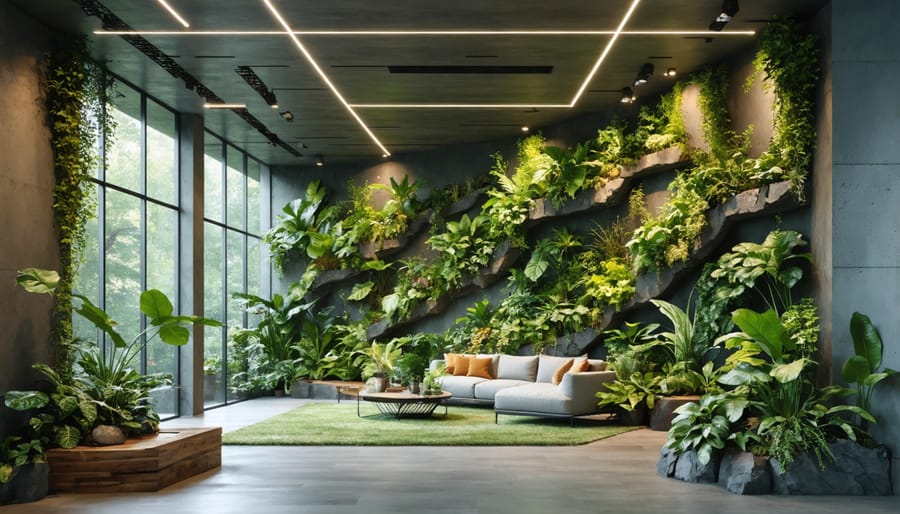
Plants: Creating living walls, interior gardens, potted plants, and atriums that introduce authentic biodiversity while improving air quality through phytoremediation.
-
Animals: Incorporating bird-friendly glazing, butterfly gardens, aquariums, or designed habitats that support urban wildlife observation.
-
Weather: Allowing building occupants to sense natural rhythms through operable windows, sheltered outdoor spaces, and designs that make seasonal changes perceptible.
B. Indirect Experience of Nature
This involves contact with representations, materials, and spatial configurations that evoke nature.
-
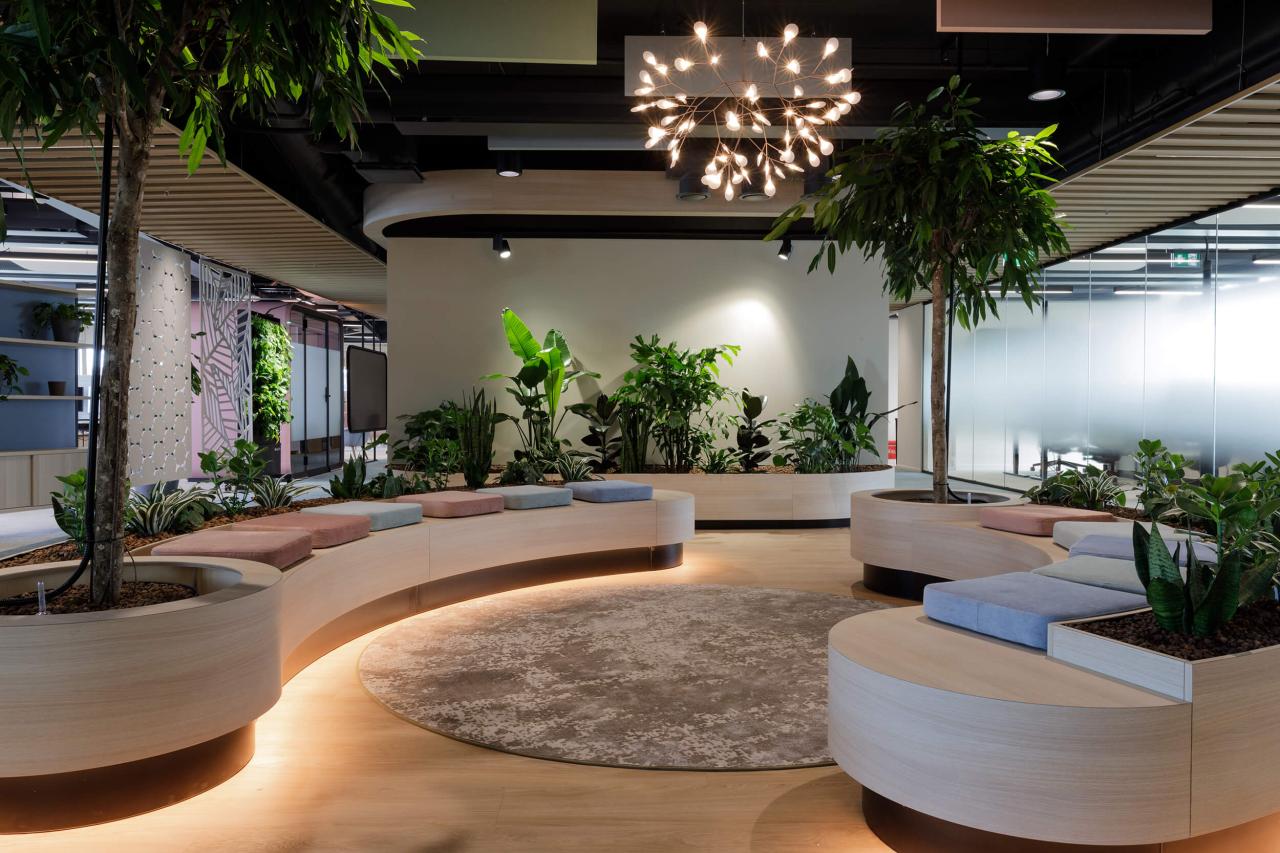
Natural Materials: Using wood, stone, bamboo, and natural textiles that retain their authentic textures, patterns, and imperfections while connecting occupants to geological and biological processes.
-
Natural Colors: Employing color palettes found in nature—earthy browns, greens, blues, and floral accents—that provide visual comfort and seasonal resonance.
-
Simulated Natural Light: Implementing circadian lighting systems that mimic the color temperature and intensity of natural daylight throughout the day to support healthy sleep-wake cycles.
-
Natural Forms and Patterns: Incorporating botanical motifs, arches, shells, and honeycomb structures that reflect the geometries, fractals, and curves found in organic systems.
-
Information Richness: Creating environments with appropriate complexity through shadow patterns, textured surfaces, and evolving arrangements that provide sensory interest without overwhelming.
C. Experience of Space and Place
This involves spatial configurations that satisfy our innate preference for certain environmental relationships.
-
Prospect and Refuge: Designing spaces that offer unobstructed views (prospect) while providing secure, enclosed areas (refuge), such as window seats, lowered ceilings in sleeping areas, or mezzanine levels.
-
Mystery: Creating partially obscured views or curved pathways that promise more information if one ventures deeper, encouraging exploration and engagement.
-
Organized Complexity: Balancing unity and diversity through designs that incorporate rich sensory information within a coherent, legible framework that the human brain can easily process.
C. Transformative Applications Across Environments
The implementation of biophilic design produces measurable benefits across diverse settings, revolutionizing how we approach different building typologies.
A. Healthcare Environments: The Prescriptive Power of Nature
Medical facilities worldwide are embracing biophilic design as a cost-effective adjunct to treatment with remarkable results.
-
Surgical Recovery: Studies demonstrate that patients with views of nature require significantly less pain medication (up to 22% less) and experience 8-10% shorter postoperative hospital stays compared to those with views of built elements.
-
Mental Health Treatment: Psychiatric facilities incorporating gardens, natural materials, and access to daylight report reduced agitation, fewer violent incidents, and improved medication compliance among patients.
-
Dementia Care: Facilities designed with clear sightlines to nature, recognizable patterns, and secure outdoor gardens report reduced wandering, agitation, and Sundowner’s Syndrome in residents.
B. Workplace Environments: Boosting Performance and Well-being
Forward-thinking corporations are discovering that biophilic design delivers substantial returns through improved employee health and performance.
-
Creativity and Problem-Solving: Employees in workplaces with biophilic elements report 15% higher levels of creativity and show improved performance on problem-solving tasks.
-
Absenteeism Reduction: Companies that have implemented comprehensive biophilic design report 10-15% reductions in absenteeism, translating to significant financial savings.
-
Employee Retention: Workplaces with natural elements demonstrate higher job satisfaction rates and lower staff turnover, with one study showing a 33% increase in intent to remain with an organization.
C. Educational Settings: Enhancing Learning Capacity
Schools and universities implementing biophilic principles are documenting impressive improvements in educational outcomes.
-
Academic Performance: Students in classrooms with adequate daylight show 20-26% faster learning rates in math and reading compared to those in environments with artificial light only.
-
Attention and Concentration: Exposure to nature views during breaks restores directed attention capacities, with students demonstrating better concentration upon returning to academic tasks.
-
Attendance Rates: Schools with green features report improved attendance, with one study showing a 5% attendance increase in buildings with vegetation and natural views.
D. Residential Applications: Creating Restorative Homes
Biophilic design transforms residences from mere shelters into truly restorative environments that support daily well-being.
-
Sleep Quality: Bedrooms designed with circadian lighting, natural materials, and appropriate ventilation contribute to more restful sleep and better-aligned circadian rhythms.
-
Social Connectivity: Homes with accessible outdoor spaces, communal gardens, and natural gathering places foster stronger social bonds among residents and neighbors.
-
Mental Restoration: Residential environments incorporating biophilic elements provide effective stress buffers, helping occupants recover from the psychological demands of daily life.
D. Case Studies: Biophilic Design in Practice
A. The Khoo Teck Puat Hospital, Singapore
This medical facility has become an international benchmark for biophilic healing environments. The hospital features:
-
A central courtyard with lush gardens and water features visible from patient rooms
-
“Therapeutic gardens” designed specifically for different patient populations
-
A butterfly trail that supports 60+ species
-
Natural ventilation throughout 80% of the building
The results include significantly lower medication costs, higher staff satisfaction, and the hospital becoming a community destination rather than just a medical facility.
B. The Amazon Spheres, Seattle
These dramatic glass domes create a workplace unlike any other, featuring:
-
More than 40,000 plants from 400+ species
-
“Tree house” meeting spaces suspended among living walls
-
A river system and waterfall feature
-
Carefully controlled temperature and humidity
The environment has become central to Amazon’s recruitment and retention strategy while providing employees with a distinctive working environment that stimulates creativity and reduces stress.
C. The Parkroyal on Pickering, Singapore
This hotel exemplifies urban biophilic integration with:
-
Sky gardens containing 15,000 square meters of lush vegetation
-
Cascading water features and infinity pools
-
Room designs that blur boundaries between inside and outside
-
Bird-friendly landscaping throughout the property
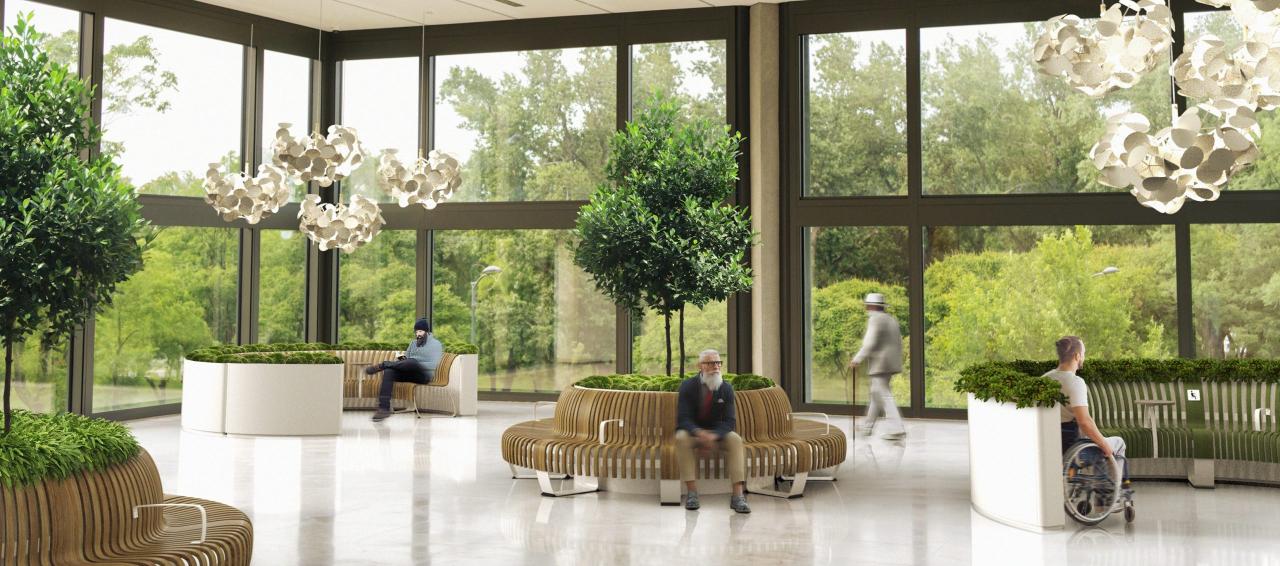
The project demonstrates how commercial hospitality venues can offer distinctive experiences while advancing urban biodiversity and sustainability goals.
E. Overcoming Implementation Challenges
Despite compelling evidence, several challenges can hinder biophilic design implementation.
A. The Cost-Perception Paradox
Many developers perceive biophilic design as an expensive luxury rather than a valuable investment. Life-cycle cost analyses that account for improved health outcomes, productivity gains, and reduced absenteeism typically reveal strong returns, but initial cost perceptions remain a barrier.
B. Maintenance and Expertise Concerns
Living systems require different maintenance approaches than conventional buildings. Successful implementation requires collaboration between designers, horticultural specialists, and facilities managers from the project’s inception.
C. The Biophilic Paradox in High-Density Urban Areas
The populations that might benefit most from nature connection often live in dense urban environments with limited access to green space. Creative solutions like vertical gardens, rooftop farms, and redesigned urban infrastructure are addressing this challenge.
Conclusion: The Essential Architecture of Well-being
Biophilic design represents far more than an architectural trend—it is a fundamental reconnection with our biological heritage that addresses the root causes of many contemporary health challenges. By systematically integrating nature into our built environments, we create spaces that do more than merely shelter us; they actively participate in our physiological and psychological restoration. The evidence is clear: environments rich with natural elements make us healthier, more productive, more creative, and more resilient. As we face increasing urbanization, climate challenges, and technological saturation, the principles of biophilic design offer a pathway toward creating environments that recognize our fundamental human needs. The future of design isn’t just about being greener; it’s about creating spaces that understand we are living biological systems who thrive best when connected to the natural world that shaped us. In this understanding lies the potential to transform not just our buildings, but our quality of life itself.
Tags: Biophilic Design, Wellness Architecture, Nature Integration, Healthy Buildings, Sustainable Design, Environmental Psychology, Interior Design, Healthcare Design, Workplace Wellness, Green Architecture