Biophilic Design Revolutionizes Architectural Wellness

The Nature-Architecture Reconnection
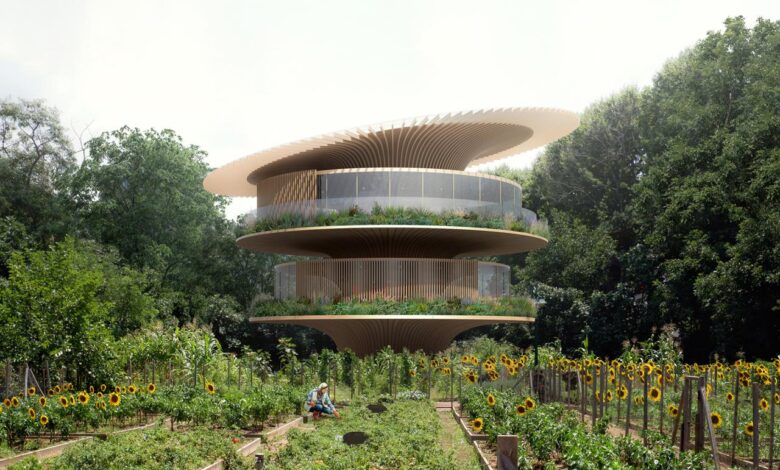
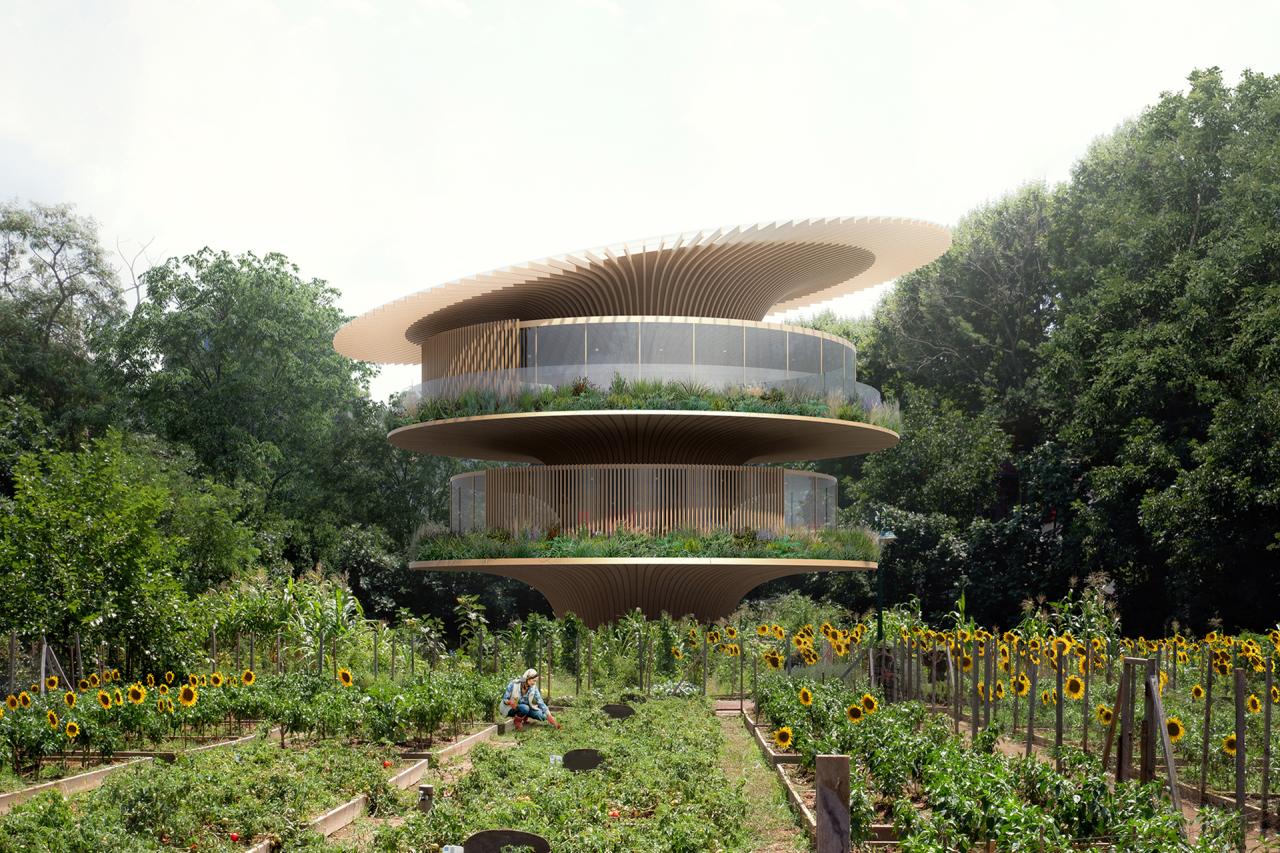
In an increasingly urbanized and technologically saturated world, biophilic architecture has emerged as a transformative approach that systematically reintegrates natural elements into built environments to enhance human health and wellbeing. This design philosophy represents far more than aesthetic plant incorporation—it’s a science-informed methodology that addresses the profound human need for connection with natural systems and processes. As research increasingly demonstrates the measurable benefits of nature-integrated spaces, architects and designers are moving beyond superficial greenery to create environments that engage our innate biological responses to natural patterns, materials, and spatial experiences. From workplaces that reduce stress and boost creativity to healthcare facilities that accelerate healing, biophilic design is proving to be a powerful tool for addressing contemporary challenges of mental health, productivity, and overall quality of life in built environments. This comprehensive analysis explores the scientific foundations of biophilic architecture, its diverse implementation strategies, measurable impacts on human wellness, and its growing importance in creating sustainable, humane built environments for the future.
A. The Science Behind Biophilic Design
Understanding the physiological and psychological mechanisms that make biophilic design effective is essential for its thoughtful implementation.
A.1. Evolutionary Psychology Foundations
Human responses to natural elements are deeply embedded in our evolutionary history.
-
Genetic Predisposition Theory: Humans have spent over 99% of our evolutionary history in natural environments, creating deep-seated biological preferences for conditions that supported survival, including prospect-refuge relationships, access to water, and connection to living systems.
-
Stress Reduction Theory: Exposure to nature triggers parasympathetic nervous system responses that lower cortisol levels, reduce blood pressure, and decrease heart rate, creating measurable physiological relaxation.
-
Attention Restoration Theory: Natural environments engage our attention in effortless ways that allow directed attention mechanisms to recover from mental fatigue, improving cognitive function and focus.
A.2. Neuroscientific Evidence
Advanced imaging technologies have revealed how nature exposure affects brain function.
-
Prefrontal Cortex Activation: Views of nature and natural patterns stimulate brain regions associated with empathy, emotional regulation, and altruism, while urban scenes without nature elements activate areas linked to fear and anxiety.
-
Default Mode Network Modulation: Exposure to natural environments positively influences the brain’s resting state network, associated with creative thinking, memory consolidation, and future planning.
-
Visual Processing Efficiency: The fractal patterns common in nature (found in leaves, clouds, water movement) are processed more efficiently by the human visual system than artificial straight lines and right angles, reducing cognitive load.
A.3. Physiological Impact Documentation
Controlled studies have quantified biophilic design’s effects on human biology.
-
Immune System Enhancement: Exposure to phytoncides (airborne chemicals produced by plants) increases natural killer cell activity and anti-cancer protein production, demonstrating improved immune function.
-
Circadian Rhythm Regulation: Properly designed daylight access helps maintain healthy cortisol and melatonin cycles, improving sleep quality and hormonal balance.
-
Autonomic Nervous System Balance: Spaces with natural elements promote better balance between sympathetic (stress) and parasympathetic (rest) nervous system activity, supporting overall physiological resilience.
B. Core Principles and Implementation Strategies
Effective biophilic design incorporates multiple dimensions of nature connection through specific, implementable strategies.
B.1. Direct Nature Integration
Incorporating living natural elements into built environments.
-
Visual Connection with Nature: Views to vegetation, water, animals, and natural landscapes through strategically placed windows, interior gardens, and aquariums.
-
Non-Visual Connection with Nature: Engaging auditory (water sounds, bird songs), haptic (textured natural materials), olfactory (natural scents), and gustatory (edible plants) experiences.
-
Presence of Water: Incorporating visible, audible, or tactile water elements that enhance experience and improve emotional response to spaces.
B.2. Indirect Nature Representation
Using natural materials, patterns, and processes that evoke nature.
-
Natural Material Connection: Utilizing wood, stone, natural fibers, and other materials that maintain their natural essence and reflect local ecology.
-
Complexity and Order: Incorporating the rich sensory information and hierarchical spatial organization found in natural environments through fractal patterns, and scaling ratios.
-
Natural Light and Shadow: Maximizing dynamic daylight penetration and creating shadow patterns that change throughout the day and seasons.
B.3. Spatial and Experiential Qualities
Designing spatial experiences that mimic natural environments.
-
Prospect and Refuge: Creating spaces that provide both overview of surroundings (prospect) and secure retreat (refuge), satisfying innate human needs for safety with visibility.
-
Mystery and Discovery: Designing partially obscured views or paths that curve out of sight to entice exploration and engage human curiosity.
-
Risk and Peril: Incorporating elements that provide manageable perceived danger, such as cantilevered overlooks or transparent railings, to create stimulating experiences.

C. Application Across Building Typologies
Biophilic design principles are being successfully adapted to various building types with measurable benefits.
C.1. Workplace and Office Environments
Biophilic design is transforming workplaces into environments that support both wellbeing and productivity.
-
Stress Reduction and Cognitive Benefits: Studies show biophilic workplaces can reduce stress markers by 15-20%, increase creativity scores by 15%, and improve cognitive function test results by 10-15%.
-
Absenteeism and Retention Impact: Companies implementing comprehensive biophilic design report 10% reduction in absenteeism and significantly improved employee retention rates.
-
Productivity Metrics: Controlled studies demonstrate 6-15% productivity increases in biophilic offices, with particular improvements in tasks requiring innovation and problem-solving.
C.2. Healthcare and Healing Environments
Medical facilities are leveraging biophilic design to improve patient outcomes and reduce staff burnout.
-
Patient Recovery Enhancement: Studies show post-surgical patients with views of nature require less pain medication (22% reduction), experience fewer complications, and have shorter hospital stays (8.5% reduction) compared to those with views of built environments.
-
Mental Health Treatment Support: Psychiatric facilities incorporating biophilic principles report reduced agitation incidents and improved treatment engagement.
-
Staff Wellbeing and Performance: Healthcare workers in biophilic environments demonstrate lower burnout rates and higher job satisfaction, directly impacting quality of patient care.
C.3. Educational Settings
Schools and universities are using biophilic design to create better learning environments.
-
Academic Performance Improvements: Students in classrooms with biophilic elements show 20-25% better learning rates and test scores compared to traditional classroom settings.
-
Attention and Focus Enhancement: Natural daylighting, views of nature, and natural materials correlate with reduced symptoms of attention deficit disorders and improved concentration.
-
Attendance and Behavior: Schools implementing biophilic design report improved attendance rates and reductions in disruptive behavior incidents.
D. Implementation Challenges and Solutions
Despite compelling evidence, biophilic design faces implementation barriers that require strategic approaches.
D.1. Cost and Maintenance Considerations
Perceived expenses often present the primary implementation obstacle.
-
Lifecycle Cost Analysis: Demonstrating how initial investments yield returns through improved productivity, reduced absenteeism, and lower healthcare costs changes the financial conversation.
-
Phased Implementation Strategies: Starting with low-cost, high-impact interventions (improved daylighting, nature imagery) builds momentum for more significant investments.
-
Maintenance Integration: Designing systems with built-in maintenance considerations and selecting appropriate plants and materials for specific contexts ensures long-term viability.
D.2. Technical and Design Integration
Successfully incorporating natural systems requires specialized knowledge.
-
Interdisciplinary Collaboration: Engaging ecologists, horticulturalists, and environmental psychologists alongside architects and engineers ensures scientifically valid implementations.
-
Climate-Responsive Solutions: Adapting biophilic strategies to local environmental conditions rather than applying universal solutions ensures functionality and sustainability.
-
Building System Coordination: Integrating living systems with mechanical, electrical, and plumbing systems demands early coordination and sometimes custom solutions.
D.3. Measurement and Validation
Documenting biophilic design’s impact requires appropriate metrics and methodologies.
-
Pre- and Post-Occupancy Evaluation: Establishing baseline measurements before implementation and tracking changes afterward provides compelling evidence of impact.
-
Multi-Metric Assessment: Combining subjective surveys with objective biometric data (heart rate variability, cortisol levels, etc.) creates comprehensive impact documentation.
-
Business-Relevant Metrics: Translating wellbeing improvements into organizational outcomes (productivity, retention, healthcare costs) makes the case for biophilic investment.
E. Future Directions and Emerging Innovations
Biophilic design continues to evolve with new technologies, research findings, and design approaches.
E.1. Technological Enhancements
Technology is expanding possibilities for nature integration in challenging contexts.
-
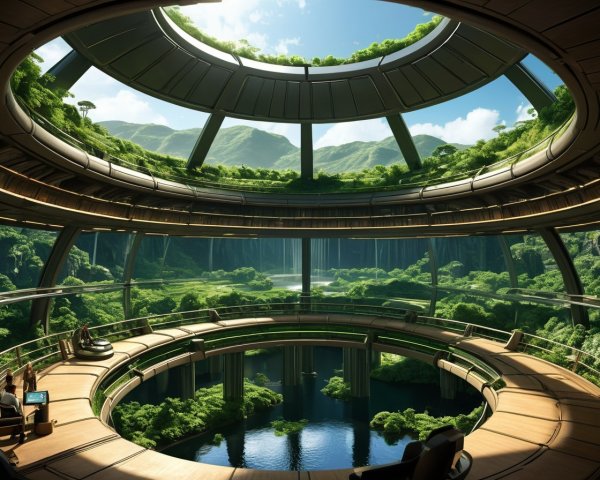
Virtual and Augmented Nature: For environments where live plants are impractical, advanced simulations can provide some biophilic benefits, particularly when incorporating multiple sensory channels.
-
Bio-responsive Systems: Buildings that actively respond to environmental conditions and occupant needs, adjusting lighting, airflow, and even spatial configurations to optimize wellbeing.
-
Advanced Living Walls and Water Systems: Technological improvements are making complex biophilic systems more reliable, affordable, and effective.
E.2. Urban Scale Applications
Biophilic principles are expanding beyond individual buildings to entire urban systems.
-
Biophilic Urban Planning: Cities are incorporating nature connectivity at district and city scales through green corridors, urban wildlife habitat, and networked natural spaces.
-
Climate Resilience Integration: Biophilic strategies are increasingly designed to serve multiple functions, including stormwater management, urban heat island mitigation, and carbon sequestration.
-
Social Equity Considerations: Ensuring biophilic benefits are accessible across socioeconomic groups, not just privileged populations.
E.3. Deep Biophilia and Cultural Evolution
The philosophical underpinnings of biophilic design continue to develop.
-
Indigenous Knowledge Integration: Learning from cultures that have maintained deep nature connections and incorporating their wisdom into contemporary design.
-
Multi-Species Design Consideration: Creating environments that support not just human wellbeing but broader ecological communities.
-
Biophilic Cultural Shifts: As evidence accumulates, biophilic principles may become fundamental to architectural education and practice rather than specialized approach.
Conclusion: The Essential Integration of Nature and Architecture
The growing embrace of biophilic architecture represents more than a design trend—it signifies a critical reorientation of how we conceive of and inhabit built environments. The compelling scientific evidence demonstrates that contact with nature is not a luxury but a fundamental human need that significantly impacts our physical health, mental wellbeing, and cognitive performance. As urbanization intensifies and technological immersion deepens, the deliberate integration of natural elements and experiences into our buildings becomes increasingly essential for human flourishing. The most successful biophilic implementations demonstrate that this approach need not compromise other design priorities—it can be beautifully integrated with aesthetic excellence, functional efficiency, and environmental responsibility. Looking forward, biophilic design seems destined to evolve from specialized strategy to fundamental design principle, recognized as essential for creating humane, healthy, life-enhancing environments. In this future, the question won’t be whether to incorporate biophilic elements, but how to most effectively weave nature connection into every space we inhabit.
Tags: biophilic design, wellness architecture, nature-inspired design, healthy buildings, sustainable architecture, human-centered design, environmental psychology, green buildings, therapeutic environments, nature connection, biophilia, wellbeing design