The Urban Crossroads
Humanity stands at a demographic precipice. For the first time in history, over half the global population resides in urban areas, a figure projected to swell to nearly 70% by 2050. This relentless urbanization presents an unprecedented challenge: how do we accommodate billions more in cities that are already straining under the weight of their own infrastructure, pollution, and social inequality? The answer is no longer just about building taller or building faster. It is about building smarter, more compassionately, and more resiliently. At the vanguard of this transformation is the modern architect, whose role has evolved from mere designer of buildings to visionary shaper of entire urban ecosystems. They are no longer just creating structures; they are actively redefining the very DNA of our urban futures, moving beyond concrete and steel to weave a new fabric of sustainable, equitable, and intelligent human habitat.
This article delves into the multifaceted strategies and revolutionary philosophies that today’s architects are employing to future-proof our cities. We will explore the transition from monolithic megastructures to integrated, living systems that breathe, adapt, and thrive in harmony with both their inhabitants and the natural world.
A. The Foundational Shift: From Solitary Building to Integrated Ecosystem
The most profound change in architectural thinking is the abandonment of the building-as-object paradigm. The 20th century was dominated by iconic, standalone structures that often ignored their context. The 21st-century architect, however, views each project as a node within a larger, dynamic urban network. This holistic approach considers the building’s lifecycle from cradle to cradle, its energy consumption, its social impact, and its relationship with the public realm.
This means considering how a new residential tower affects local wind patterns, how its shadow impacts a public park, where its wastewater flows, and how it can contribute power back to the city grid. It’s a shift from architecture as sculpture to architecture as organ, a vital and interconnected part of the urban body. This systems-thinking is the bedrock upon which all other innovations are built.
B. Pillars of the Future-Proofed City: Core Architectural Strategies
To translate this holistic vision into reality, architects are focusing on several core, interconnected strategies. These are not standalone trends but synergistic components of a new urban logic.
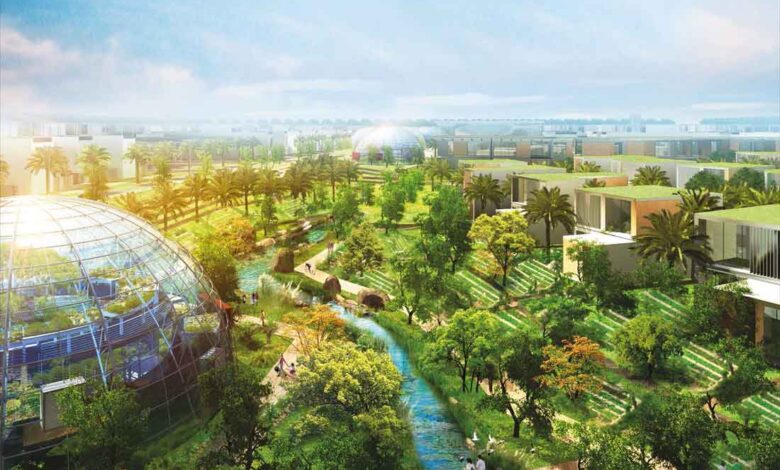
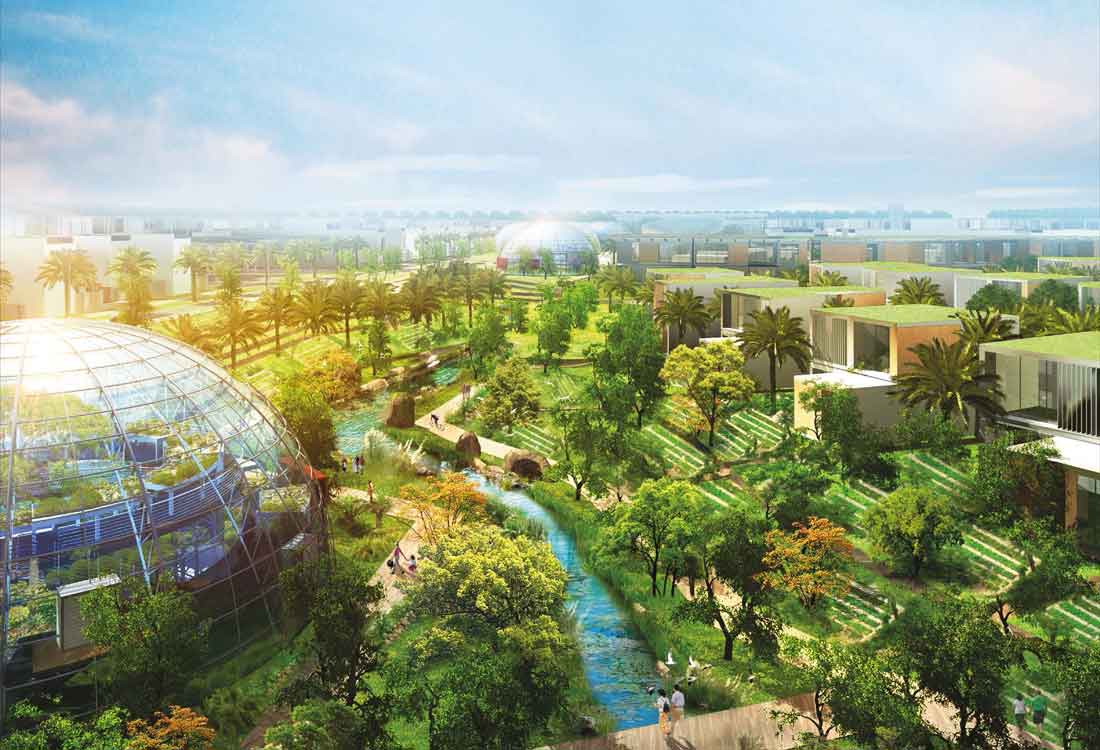
A. Biophilic Design: Re-wilding the Concrete Jungle
The term “biophilia” describes humanity’s innate tendency to connect with nature and other forms of life. Biophilic design strategically integrates natural elements into the built environment to improve occupant well-being, productivity, and psychological health.
-
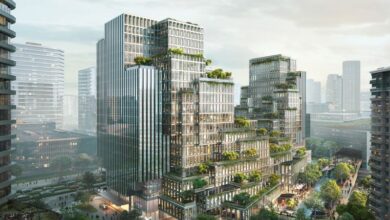
Direct Integration: This includes features like interior green walls, indoor water features, ample natural light and ventilation, and the use of natural materials like wood and stone. The Bosco Verticale (Vertical Forest) in Milan, Italy, is a seminal example, with its towers hosting hundreds of trees and thousands of plants that absorb CO2, produce oxygen, and provide habitat for birds and insects.
-
Indirect and Symbolic Integration: This involves using colors, patterns, and forms found in nature. An office building might mimic the fractal branching of a tree in its support structure, or a hospital might use a color palette of soft greens and blues to promote calm.
-
Benefits Beyond Aesthetics: The advantages are quantifiable. Studies show that biophilic design can reduce stress, lower blood pressure, improve cognitive function, and accelerate healing in medical facilities. For the city at large, it mitigates the Urban Heat Island effect, improves air quality, and manages stormwater.
B. The Circular Economy: Designing Out Waste
The traditional linear economy—take, make, dispose—is a recipe for urban resource depletion. Architects are now championing the circular model, which aims to eliminate waste and continuously reuse materials.
-
Design for Disassembly (DfD): Buildings are designed like Lego sets, with components that can be easily dismantled, repaired, and reused instead of being demolished and sent to a landfill. This involves using bolted connections instead of welded ones and selecting materials with clear, recyclable lifecycles.
-
Adaptive Reuse and Upcycling: Instead of demolishing old structures, architects are creatively repurposing them. Factories become loft apartments, old shipping containers transform into affordable housing modules, and decommissioned power plants become vibrant cultural centers. This preserves embodied energy (the energy already consumed to create the original building) and maintains historical character.
-
Use of Recycled and Bio-based Materials: Innovation in material science is key. Architects are specifying everything from bricks made of construction waste to insulation from mycelium (mushroom roots) and structural panels from fast-growing bamboo. These materials are not only sustainable but often have superior performance characteristics.
C. Climate Resilience and Adaptive Architecture
With climate change bringing more frequent and severe weather events, cities must be fortified. Architects are designing buildings that can withstand, adapt to, and even recover from environmental shocks.
-
Flight and Float Strategies: In flood-prone areas, architects are designing amphibious buildings on buoyant foundations that rise with floodwaters. In coastal regions, structures are being elevated on pilings to allow storm surges to pass underneath harmlessly.
-
Passive Survivability: This concept ensures a building can maintain critical life-support conditions during extended power outages. This includes super-insulated envelopes, passive solar heating and cooling, and natural ventilation systems that function independently of the grid.
-
Fire-Resistant Landscaping and Materials: In wildfire zones, architects are creating defensible spaces using non-combustible materials for exteriors and strategic landscaping with fire-resistant plants to create a buffer zone.

D. Technological Integration and the Rise of the Smart City
Technology is the nervous system of the future city, and architects are its central planners. The Internet of Things (IoT), Big Data, and Artificial Intelligence (AI) are being embedded into the urban fabric.
-
The Responsive Building Envelope: Facades are no longer static. They are dynamic systems that can respond to external conditions. Electrochromic glass can tint to control solar heat gain, and kinetic shading devices can adjust in real-time to the sun’s path, optimizing energy efficiency.
-
Data-Driven Urban Management: Sensors throughout a building and the city can monitor everything from energy usage and traffic flow to air quality and waste levels. This data allows for the hyper-efficient management of resources, predicting maintenance needs before they become failures and dynamically allocating electricity where it’s needed most.
-
Generative Design: Architects are using AI algorithms to explore thousands of design options based on set parameters (e.g., maximize sunlight, minimize energy use, optimize views). This leads to highly efficient and often unexpected design solutions that a human mind might not conceive.
E. Social Equity and Human-Centric Urbanism
A sustainable city is not just an environmentally sound one; it is a socially just one. Architects have a profound responsibility to design for inclusivity, community, and well-being for all citizens, regardless of income or ability.
-
The 15-Minute City Concept: Architects are championing this urban planning model where all daily necessities—work, food, healthcare, education, and recreation—are within a 15-minute walk or bike ride from one’s home. This reduces car dependency, fosters local communities, and improves quality of life.
-
Universal and Inclusive Design: This goes beyond basic accessibility ramps. It’s about creating environments that are usable by all people, to the greatest extent possible, without the need for adaptation. This includes considerations for the visually and hearing impaired, the elderly, and children, creating a truly democratic public realm.
-
Tactical Urbanism and Community Co-Design: Architects are increasingly acting as facilitators, working directly with communities to design spaces that meet their specific needs. This participatory process, sometimes involving temporary, low-cost interventions (tactical urbanism), ensures that the resulting architecture reflects the culture and desires of its users, fostering a powerful sense of ownership and belonging.
C. Case Study in Synthesis: Copenhagen’s Nordhavn District
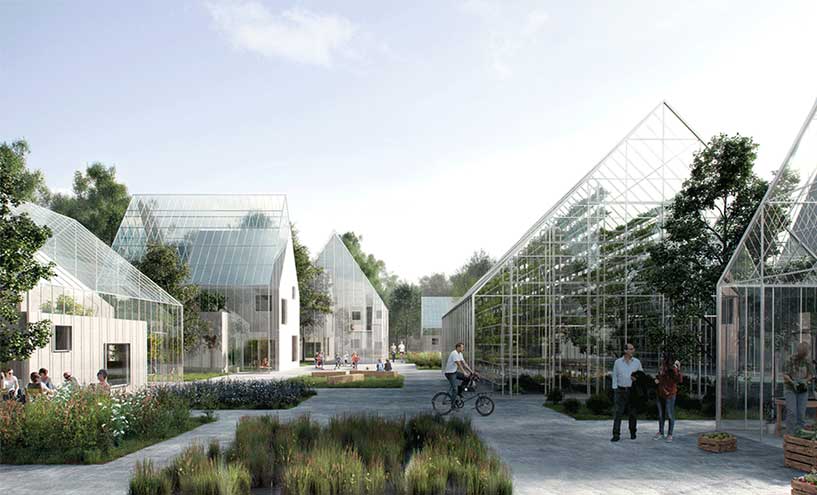
A powerful real-world example of these principles in action is the redevelopment of Copenhagen’s Nordhavn district. This former industrial port is being transformed into a carbon-neutral urban district for 40,000 people. It embodies the integrated approach:
-
Circular Economy: Demolition waste from the old port is being crushed and reused as sub-base for new roads and parks.
-
Climate Resilience: The district is being elevated to handle future sea-level rise, and its stormwater management system is designed as a visible, attractive feature of the landscape, with canals and green roofs filtering rainwater before it reaches the harbor.
-
Smart Technology: A district heating system powered by renewable energy and an intelligent grid that optimizes energy consumption are central to its carbon-neutral goal.
-
Human-Centric Design: The street network prioritizes cyclists and pedestrians, and the mix of housing, offices, and amenities adheres to the 15-minute city ideal.
Nordhavn isn’t a collection of individual sustainable buildings; it is a single, cohesive sustainable system, demonstrating how all these architectural strategies can be woven together.
D. The Inevitable Challenges and Ethical Considerations
This path to a redefined urban future is not without its obstacles. The high initial cost of sustainable technologies can be a barrier. Complex regulatory frameworks and outdated zoning laws often stifle innovation. Furthermore, the integration of smart technology raises critical questions about data privacy and the potential for creating a surveillance infrastructure.
Architects must therefore also be advocates and ethicists, working with policymakers to update regulations, with financiers to develop new models for green investment, and with the public to ensure that the smart cities of tomorrow are not only efficient but also free and open.
Conclusion: The Blueprint for a New Urban Dawn
The task of redefining our urban futures is one of the most pressing and complex endeavors of our time. It requires a radical reimagining of what a city is and can be. The architects leading this charge are demonstrating that our future metropolises need not be synonymous with pollution, congestion, and social isolation. Instead, they can be vibrant, breathable, resilient, and profoundly humane ecosystems.
By embracing biophilic principles, a circular economy, climate resilience, intelligent technology, and a steadfast commitment to social equity, they are drafting a blueprint for a new urban dawn. This is not a distant utopia; the foundations are being laid today in projects from Copenhagen to Singapore. The city of the future is a living, breathing entity, and its architects are the midwives of its birth, ensuring that as our urban world grows, it does so with intelligence, grace, and a deep respect for the planet and all its inhabitants.
Tags: Sustainable Architecture, Urban Planning, Smart Cities, Green Building, Biophilic Design, Circular Economy, Climate Resilience, Future Cities, Urban Design, Community Development