Green Architecture Now Leads Global Economic Growth

Beyond a Niche, A New Economic Engine
For decades, green architecture was perceived as a noble but niche pursuit—an expensive luxury for environmentally conscious corporations or affluent homeowners. It was often relegated to the sidelines of mainstream construction, viewed as a cost center rather than a profit driver. However, a profound and irreversible shift has occurred. Today, green architecture has decisively shattered its boutique image to emerge as a powerful, central engine of global economic growth. This transformation is not merely about constructing more energy-efficient buildings; it is about catalyzing a multi-trillion-dollar economic revolution that spans technology, finance, real estate, and social equity. This article delves into the compelling data and transformative strategies proving that sustainable design is no longer an optional add-on but the fundamental cornerstone of 21st-century economic and urban development, leading growth in ways we are only beginning to comprehend.
A. The Economic Imperative: Deconstructing the Growth Narrative
The growth propelled by green architecture is multidimensional, impacting direct financial returns, large-scale job creation, and monumental market expansion. It is a growth story built on efficiency, resilience, and value creation.
A. The Financial Performance Advantage
The outdated perception that sustainable buildings are inherently more expensive to construct has been thoroughly debunked by a wealth of data. A life-cycle cost analysis—which evaluates the total cost of ownership from construction to operation and maintenance—consistently reveals the superior financial performance of green structures.
-
Operational Efficiency: Green buildings integrate high-performance insulation, energy-efficient HVAC systems, LED lighting, and water-saving fixtures. This leads to a dramatic reduction in utility costs. Studies by organizations like the U.S. Green Building Council show that LEED-certified buildings can see energy savings of up to 30% and water savings of nearly 20% compared to conventional buildings. These are not incidental savings; they are direct, recurring contributions to the bottom line.
-
Enhanced Asset Value and Rental Premiums: The market now assigns a tangible premium to sustainable properties. Green-certified buildings consistently command higher rental rates and have lower vacancy rates. Investors and tenants recognize the value of lower operational expenses, healthier indoor environments, and future-proofed assets. This translates into higher property valuations and a more robust return on investment (ROI), making them more attractive to institutional investors and real estate investment trusts (REITs).
-
Risk Mitigation and Regulatory Foresight: As governments worldwide implement stricter carbon emissions regulations and building codes, green buildings are inherently less risky. They are already aligned with, or even exceed, future compliance standards, protecting owners from costly retrofits, potential carbon taxes, and stranded asset scenarios.
B. Job Creation and the Green Labor Market
The green architecture boom is not confined to architects and engineers. It is fueling a massive surge in employment across a diverse spectrum of skilled trades and professions, creating what economists term the “green collar” workforce.
-
Direct Employment: This includes roles in the manufacturing of sustainable materials (e.g., recycled steel, low-carbon concrete, advanced glazing systems), the installation of renewable energy systems (solar panels, geothermal loops), and specialized construction trades like green roof installers and energy auditors.
-
Indirect and Induced Employment: The ripple effects are significant. The growth of this sector stimulates jobs in research and development for new materials, software development for Building Information Modeling (BIM) and energy simulation, and professional services like sustainability consulting and green building certification.
-
Workforce Upskilling: This transition necessitates and funds a massive upskilling of the global construction workforce, creating more specialized, higher-paying jobs and fostering a new generation of tradespeople equipped for the future of their industry.
C. The Explosive Market Expansion
The market for green building materials and technologies is experiencing exponential growth, far outpacing the broader construction sector.
-
Material Innovation: The demand for bio-based insulation, smart glass, low-VOC paints, and sustainably harvested timber is creating entirely new supply chains and manufacturing verticals.
-
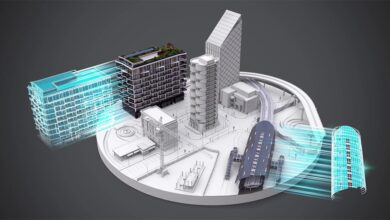
Technology Integration: The convergence of architecture with PropTech (Property Technology) is a massive growth area. The market for building automation systems, IoT sensors for energy management, and AI-driven building optimization platforms is projected to reach hundreds of billions of dollars within the next few years, all directly fueled by the green building movement.
B. The Strategic Pillars of Green Architectural Growth
The economic benefits are driven by specific, strategic approaches that define modern green architecture. These are the operational frameworks that translate environmental principles into financial gains.
A. Energy Positivity and Grid Independence
The ultimate goal is moving beyond energy efficiency to energy positivity. Net-positive energy buildings generate more power than they consume over the course of a year.
-
Technological Synergy: This is achieved through a synergistic combination of building-integrated photovoltaics (BIPV), where the building envelope itself becomes a power generator, highly efficient building forms, and geothermal exchange systems.
-
Economic Upside: Surplus energy can be sold back to the grid, creating a new revenue stream for building owners. This not only reduces operational costs to negative but also enhances grid stability and resilience, contributing to national energy security—a macroeconomic benefit.
B. Circular Economy and Material Innovation
The linear “take-make-dispose” model is economically and environmentally wasteful. Green architecture champions the circular economy, which is a powerful engine for innovation and cost savings.
-
Design for Disassembly (DfD): Buildings are designed as material banks. Components are bolted together rather than welded or glued, allowing them to be disassembled, refurbished, and reused at the end of a building’s life, retaining their economic value.
-
Upcycled and Bio-based Materials: The use of materials like cross-laminated timber (CLT), mycelium composites, and bricks made from construction waste is not just an ecological choice but an economic one. It reduces dependence on virgin resources, minimizes landfill costs, and opens up new, sustainable material markets.
C. Biophilic Design and Human Capital ROI
Perhaps the most underrated economic driver is the impact of green design on human health and productivity. Biophilic design—integrating nature into the built environment—has direct, quantifiable benefits for a company’s most valuable asset: its people.
-
Productivity Gains: Studies by Harvard T.H. Chan School of Public Health and others have shown that employees in green, well-ventilated offices with ample natural light demonstrate significantly higher cognitive function scores, better sleep quality, and fewer sick days.
-
Healthcare Cost Reduction: In healthcare settings, patients with access to nature and daylight have been shown to heal faster, requiring less pain medication and shorter hospital stays, leading to substantial cost savings for healthcare systems.
-
Talent Attraction and Retention: A healthy, pleasant work environment is a powerful tool for attracting and retaining top talent, reducing recruitment costs and boosting organizational stability.

C. Case Studies: The Green Blueprint in Action
A. The Edge, Amsterdam (PLATINUM BOMA Standard)
Widely hailed as the world’s most sustainable office building, The Edge is a testament to the economic power of green design. It uses 70% less electricity than a typical office building. Its rooftop solar panels generate more power than it consumes. A deep aquifer thermal energy storage system provides efficient heating and cooling. The building’s smart technology allows employees to control their lighting and temperature via a smartphone app. The result? A virtually zero-energy building that is also one of the most sought-after office addresses in Europe, boasting 100% occupancy and a tenant (Deloitte) that reports a significant increase in employee satisfaction and productivity.
B. The Bosco Verticale (Vertical Forest), Milan
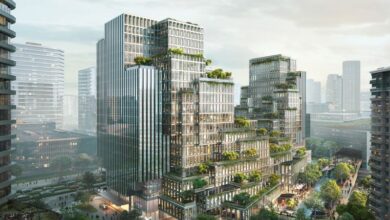
This residential project took biophilic design to a new level by incorporating over 900 trees and 20,000 plants on its facades. While the initial investment was higher, the economic returns are multifaceted. The micro-forest absorbs CO2 and particulate matter, produces oxygen, and regulates the building’s temperature, reducing energy needs for heating and cooling. The building has become an international icon, boosting property values not only within the towers but throughout the neighborhood, and has spawned a global trend in vertical afforestation, creating a new niche market in real estate.
D. Overcoming Barriers and The Road Ahead
Despite the overwhelming evidence, barriers remain. These include perceived first costs, a lack of awareness among some traditional developers, and fragmented supply chains for new materials. Overcoming these requires:
-
Policy Leadership: Governments must continue to strengthen building codes and offer incentives for green construction and retrofits.
-
Financial Innovation: Banks and lenders need to develop “green mortgages” and favorable loan terms for projects with superior sustainability credentials, recognizing their lower risk profile.
-
Industry Education: A continuous effort is needed to educate all stakeholders—from developers to contractors—on the long-term economic calculus of green architecture.
Conclusion: The Inevitable Trajectory of Progress
The evidence is unequivocal: green architecture is not a passing trend but the new operational standard for a prosperous, resilient, and healthy global economy. It leads growth by generating direct financial returns, creating millions of jobs, fostering technological innovation, and enhancing the productivity of the human capital within these spaces. The question for investors, developers, and policymakers is no longer if they should adopt green principles, but how quickly they can integrate them to remain competitive and profitable. The future of economic growth is intrinsically linked to the future of sustainable design, and that future is being built today, one green building at a time.
Tags: Green Architecture, Sustainable Design, Economic Growth, Green Building, LEED Certification, Energy Efficiency, Circular Economy, Biophilic Design, Sustainable Construction, Green Jobs