Modular Architecture Revolutionizes Construction Worldwide

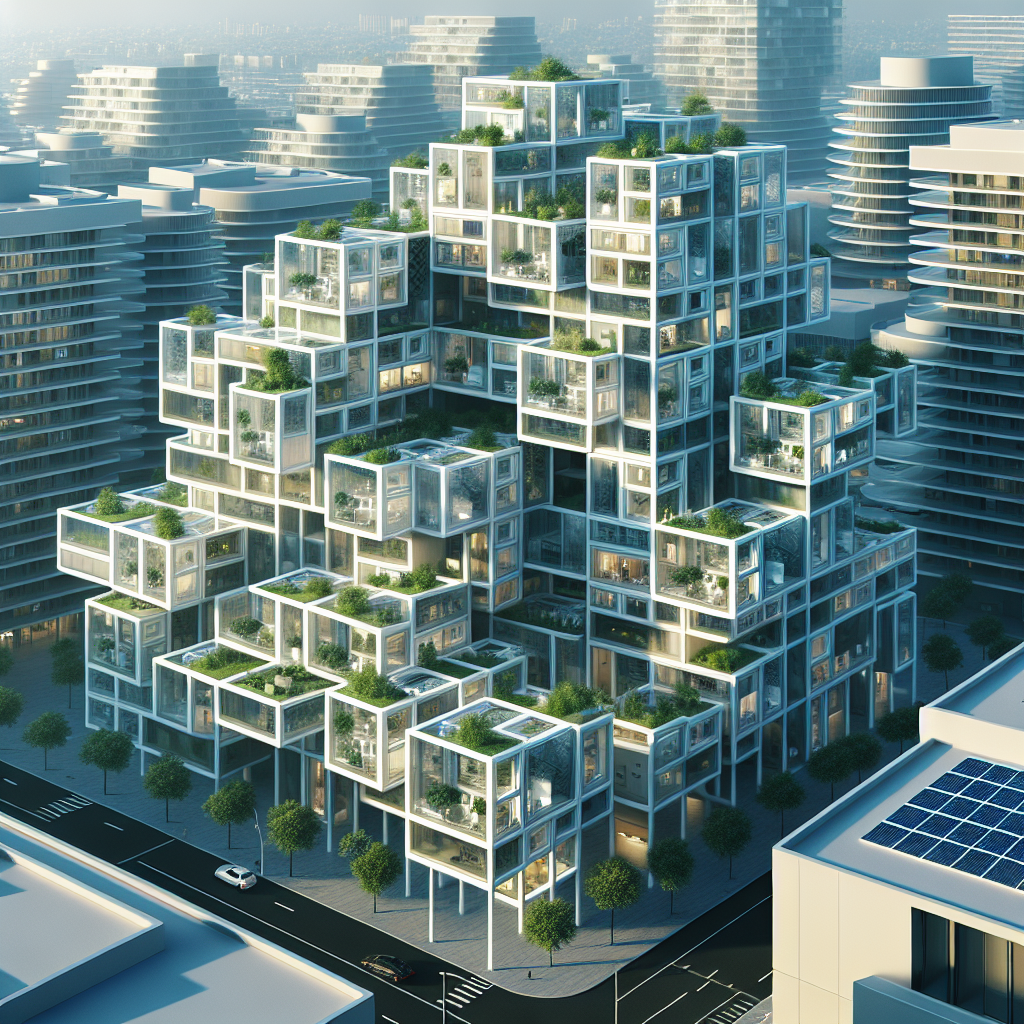
The Silent Revolution in Building Design
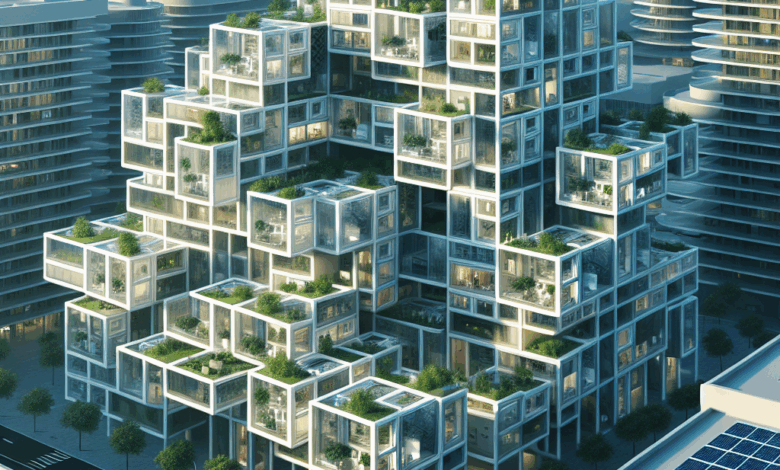
A profound transformation is underway in how we conceive, design, and construct the buildings that shape our world. Modular architecture, once associated with temporary classrooms and construction site offices, has matured into a sophisticated methodology challenging centuries of conventional construction practices. This approach—which involves fabricating building components in controlled factory environments before transporting them to sites for assembly—represents more than just a technical innovation. It embodies a fundamental shift toward precision, efficiency, and sustainability in an industry historically resistant to change. As urban populations swell and construction demands outpace traditional methods, modular construction is emerging as the definitive solution for creating quality structures in less time, with less waste, and with greater predictability. This comprehensive examination explores how modular architecture is reshaping skylines, redefining affordability, and establishing new benchmarks for what’s possible in the built environment.
A. Historical Context: From Prefabrication to Precision Manufacturing
To appreciate modular architecture’s current revolution, we must understand its evolution from basic prefabrication to today’s high-tech manufacturing processes.
A. Early Prefabrication Movements
The concept of building components elsewhere for onsite assembly isn’t new. Historical examples include:
-
19th Century Portable Buildings: During the California Gold Rush, prefabricated houses were shipped from the East Coast to accommodate rapid population growth.
-
Post-War Prefabrication: Following World War II, European nations employed prefabricated systems to quickly address housing shortages, though these often suffered from quality and aesthetic limitations.
-
Modernist Experiments: Architects like Le Corbusier and Buckminster Fuller explored manufactured housing concepts, laying philosophical groundwork for today’s modular approaches.
B. The Digital Manufacturing Revolution
What distinguishes contemporary modular architecture is its integration with digital technologies:
-
Building Information Modeling (BIM): Advanced 3D modeling allows designers, engineers, and manufacturers to collaborate on modular components with millimeter precision before fabrication begins.
-
Computer-Aided Manufacturing (CAM): Factory robots cut, weld, and assemble components with tolerances impossible to achieve consistently in traditional construction.
-
Digital Twin Technology: Virtual replicas of modular buildings allow for performance simulation and maintenance planning throughout the structure’s lifecycle.
B. The Driving Forces Behind Modular Momentum
Multiple converging factors are accelerating modular architecture’s adoption across residential, commercial, and institutional sectors.
A. The Global Labor Productivity Crisis
Traditional construction has experienced stagnant productivity for decades, with labor productivity growing at approximately one-third the rate of the total economy. Modular construction addresses this through:
-
Factory Efficiency: Manufacturing in controlled environments eliminates weather delays and enables continuous workflow optimization.
-
Specialized Labor: Factory workers develop specialized skills through repetition, achieving higher quality outcomes faster than general construction crews.
-
Parallel Processes: Site preparation and foundation work can proceed simultaneously with module fabrication, compressing project timelines by 30-50%.
B. The Sustainability Imperative
With the building sector accounting for nearly 40% of global carbon emissions, modular construction offers substantial environmental advantages:
-
Material Optimization: Factory precision cutting reduces material waste by up to 90% compared to traditional construction sites.
-
Lifecycle Efficiency: Tighter construction joints and superior insulation in factory-built modules result in 15-20% better energy performance throughout the building’s life.
-
Circular Economy Compatibility: Modular buildings designed for disassembly enable material recovery and reuse at the end of the structure’s life, supporting circular economy principles.
C. Technological Convergence
Several technological advancements have removed previous limitations:
-
Advanced Transportation Logistics: Sophisticated routing software and specialized transportation equipment enable movement of larger, more complex modules.
-
Structural Engineering Innovations: New connection systems and structural designs allow modular buildings to reach unprecedented heights and spans.
-
Material Science Breakthroughs: Developments in cross-laminated timber, lightweight composites, and high-performance facade systems expand modular architecture’s design possibilities.
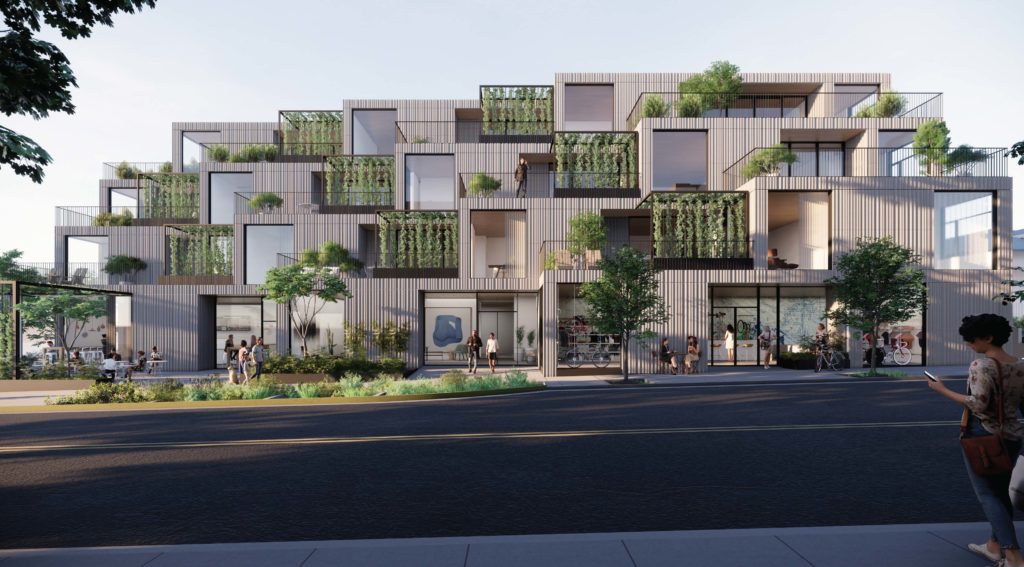
C. The Modular Design Revolution: Beyond the Box
The stereotype of modular architecture as boring, repetitive boxes has been shattered by innovative design approaches.
A. Design for Manufacturing and Assembly (DfMA)
This methodology rethinks architectural design specifically for factory production:
-
Modular Coordination: Establishing standard dimensional grids that optimize material use and manufacturing efficiency while allowing design variation.
-
Kit-of-Parts Philosophy: Creating catalogs of standardized, interoperable components that can be configured in numerous ways to create unique buildings.
-
Tolerance Management: Designing connections that accommodate minor variations while maintaining performance and aesthetic integrity.
B. Hybrid Approaches
The most successful modular projects often blend approaches:
-
Modular Core and Shell: Using modules for repetitive elements like bathroom pods, hotel rooms, or apartment units while employing conventional construction for unique spaces.
-
Panelized Systems: Manufacturing complete wall, floor, and roof panels with finishes pre-installed for rapid onsite assembly.
-
Volumetric and Component Integration: Combining fully-finished modules with panelized systems and site-built elements for optimal results.
C. Aesthetic Freedom Through Standardization
Paradoxically, standardization enables greater design freedom:
-
Customizable Standard Components: Manufacturers offer standardized components with extensive customization options for finishes, configurations, and exterior treatments.
-
Parametric Design Integration: Algorithmic design tools can generate unique modular configurations that respond to specific site conditions and program requirements.
-
Material Expression: The ability to work with diverse materials—from mass timber to corten steel—allows modular buildings to achieve distinctive architectural characters.
D. Sector-Specific Transformations
Modular architecture’s impact varies across building types, with particularly significant transformations in these sectors:
A. Residential Construction Revolution
Housing faces the most urgent need for modular solutions:
-
Affordable Housing: Modular construction can deliver quality housing at 15-20% lower cost than conventional methods, making affordable housing projects more financially viable.
-
Multifamily Development: The repetitive nature of apartment buildings makes them ideal for modular approaches, with projects completing 30-40% faster.
-
Custom Single-Family Homes: High-end custom homes increasingly incorporate modular components for higher quality control and faster occupancy.
B. Healthcare and Institutional Buildings
These demanding environments benefit particularly from modular precision:
-
Hospital Patient Rooms: Repeatable patient room modules with integrated medical gases, plumbing, and electrical systems can be manufactured to clinical standards.
-
Laboratory Facilities: Controlled factory environments enable cleaner construction of sensitive laboratory spaces with complex servicing requirements.
-
Educational Buildings: Schools and universities use modular construction to accommodate fluctuating enrollments and rapidly expand facilities.
C. Hospitality and Commercial Applications
The business case for modular is particularly strong in these sectors:
-
Hotel Construction: Major hotel chains now routinely use modular construction, with companies like Marriott reporting 40% faster opening dates.
-
Office Buildings: Corporate tenants appreciate the faster occupancy and higher quality finishes achievable through factory production.
-
Retail Facilities: Modular construction enables rapid deployment of retail spaces in developing markets or pop-up locations.
E. Case Studies: Modular Architecture in Practice
A. The Ten Brock Street, London
This 44-story residential tower represents the current pinnacle of modular high-rise construction:
-
Scale: 804 modules manufactured offsite
-
Timeline: Completed in approximately half the time of conventional construction
-
Quality: Achieved exceptional acoustic and thermal performance standards
-
Innovation: Used a hybrid approach with a conventional concrete core and modular apartments
B. The Google Charleston East Campus, California
This groundbreaking corporate campus demonstrates modular architecture’s potential for cutting-edge commercial design:
-
Prefabricated Components: 90% of building components were prefabricated
-
Canopy Structure: Features the largest modular elliptical canopy ever constructed
-
Sustainability: Targeting LEED Platinum certification through modular precision
-
Flexibility: Designed for disassembly and reconfiguration as needs change
C. The Clement Canopy, Singapore
This residential development broke records as the world’s tallest modular building at 140 meters:
-
Productivity: Achieved 50% faster construction than conventional methods
-
Safety: Reduced onsite workforce by 50%, enhancing safety
-
Quality: Delivered superior construction quality with minimal defects
-
Innovation: Developed new regulatory frameworks for high-rise modular construction
F. Overcoming Implementation Challenges
Despite its advantages, modular architecture faces significant adoption barriers that the industry is systematically addressing.
A. Financial and Regulatory Hurdles
The traditional construction ecosystem presents obstacles:
-
Financing Models: Lenders and insurers are developing new assessment frameworks for modular projects with different risk profiles and payment schedules.
-
Building Codes: Regulatory systems designed for site-built construction are adapting to accommodate factory-certified components and alternative inspection protocols.
-
Valuation Methods: Appraisers are creating new methodologies to properly value the different cost structures and depreciation schedules of modular buildings.
B. Supply Chain and Logistics Complexity
Managing modular projects requires different expertise:
-
Transportation Constraints: Module size is limited by transportation infrastructure, requiring sophisticated routing and timing coordination.
-
Supply Chain Integration: Successful modular construction demands tighter integration between manufacturers, material suppliers, and transportation providers.
-
Site Logistics: Staging and craning modules requires precise sequencing and significant temporary space, particularly in dense urban sites.
C. Industry Mindset and Skills Transformation
Perhaps the most significant challenge is cultural:
-
Traditional Mindset: Overcoming perception of modular as “cheap” or “temporary” requires education and demonstration projects.
-
New Skills Requirements: The industry needs professionals skilled in manufacturing, logistics, and digital design rather than solely traditional trades.
-
Collaborative Models: Success requires earlier and deeper collaboration between architects, engineers, manufacturers, and contractors.
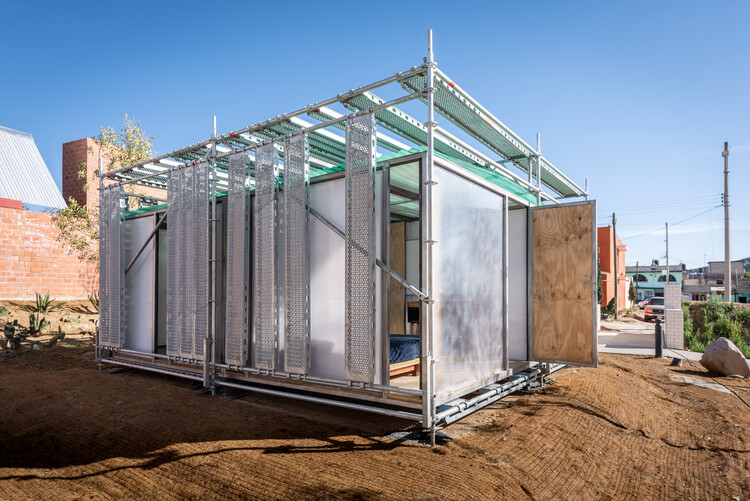
G. The Future Trajectory of Modular Architecture
The modular revolution is accelerating, with several emerging trends shaping its future direction.
A. Robotics and Automation Integration
Next-generation modular factories are embracing advanced automation:
-
Robotic Fabrication: Robots handle cutting, welding, and assembly tasks with superhuman precision and speed.
-
Automated Material Handling: Autonomous guided vehicles move components through factories without human intervention.
-
Quality Control Systems: Computer vision systems automatically inspect components for defects throughout manufacturing.
B. Mass Customization Through Digital Technologies
The future points toward personalized modular buildings:
-
Generative Design Platforms: AI-driven design tools will generate optimized modular configurations for specific user requirements.
-
Digital Customer Interfaces: Clients will customize their modular buildings through intuitive digital platforms showing real-time cost and schedule implications.
-
Additive Manufacturing Integration: 3D printing will create custom components within otherwise standardized modular systems.
C. Global Standardization and Local Adaptation
The industry is moving toward balanced standardization:
-
Open-Source Modular Systems: Standardized connection systems will enable interoperability between components from different manufacturers.
-
Regional Manufacturing Networks: Distributed micro-factories will serve local markets while adhering to global quality standards.
-
Climate-Responsive Modular Designs: Modular systems will evolve specific variations optimized for different climatic zones and cultural preferences.
Conclusion: The Inevitable Ascendance of Modular Architecture
Modular architecture represents more than a construction method—it embodies a fundamental realignment of how we create our built environment. By bringing building construction into the digital manufacturing age, it addresses the critical challenges of our time: the urgent need for housing, the imperative of environmental sustainability, and the demand for economic efficiency. The evidence is increasingly clear—modular architecture delivers better buildings faster, with less waste and more predictable outcomes. As manufacturing scales, technologies advance, and industry resistance diminishes, modular approaches will likely become the dominant paradigm for most building types. The buildings of our future will increasingly emerge not from chaotic construction sites, but from precision factories, arriving at their sites not as piles of raw materials, but as finished components ready for assembly into sophisticated, sustainable, and human-centered environments. The momentum behind modular architecture is not just gaining—it’s building toward an inevitable transformation of our world.
Tags: Modular Architecture, Prefabricated Construction, Offsite Manufacturing, Building Innovation, Construction Technology, Sustainable Building, Design for Manufacturing, Modular Design, Construction Efficiency, Future of Construction